EVA’S Academy AI-Integrated OSCE Training for Global Nurses Preparing for New Zealand
 By
By 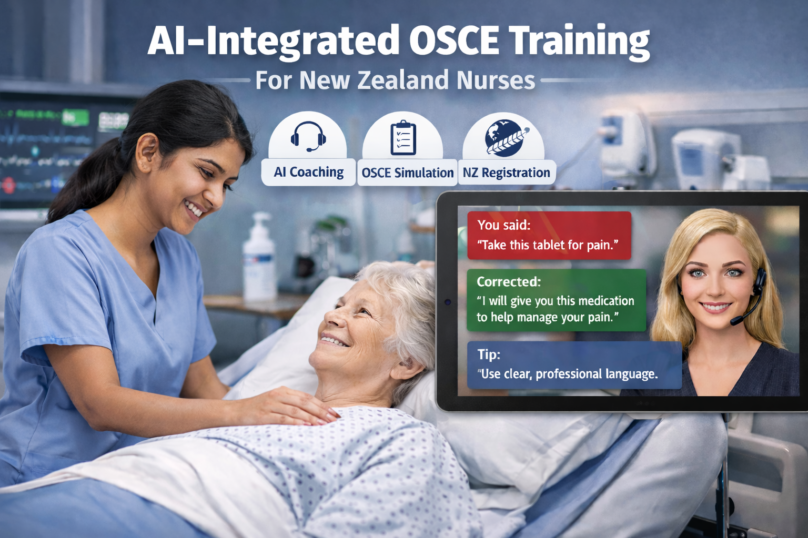
Internationally qualified nurses who want to work in New Zealand must complete a structured registration pathway through the Nursing Council of New Zealand.
This process includes theoretical knowledge assessment and clinical competency evaluation before nurses can practice safely within the New Zealand healthcare system.
At EVAS Academy, we combine advanced AI-supported learning technology with hands-on OSCE training to help international nurses build the communication, clinical reasoning, and patient-interaction skills required for success.
EVAS Academy is among the first OSCE training institutes in India to introduce AI-assisted communication coaching for New Zealand nursing preparation.
Understanding the New Zealand Nursing Registration Pathway
International nurses must complete several stages before becoming a registered nurse in New Zealand.
1. IQN Theory Examination
The IQN (Internationally Qualified Nurse) theory exam evaluates nursing knowledge and clinical decision-making.
Key focus areas include:
- Patient safety and clinical practice
- Medication administration and pharmacology
- Infection prevention and control
- Professional and ethical nursing practice
- Clinical decision making
This exam ensures that international nurses meet the theoretical standards required within the New Zealand healthcare system.
2. OSCE – Objective Structured Clinical Examination
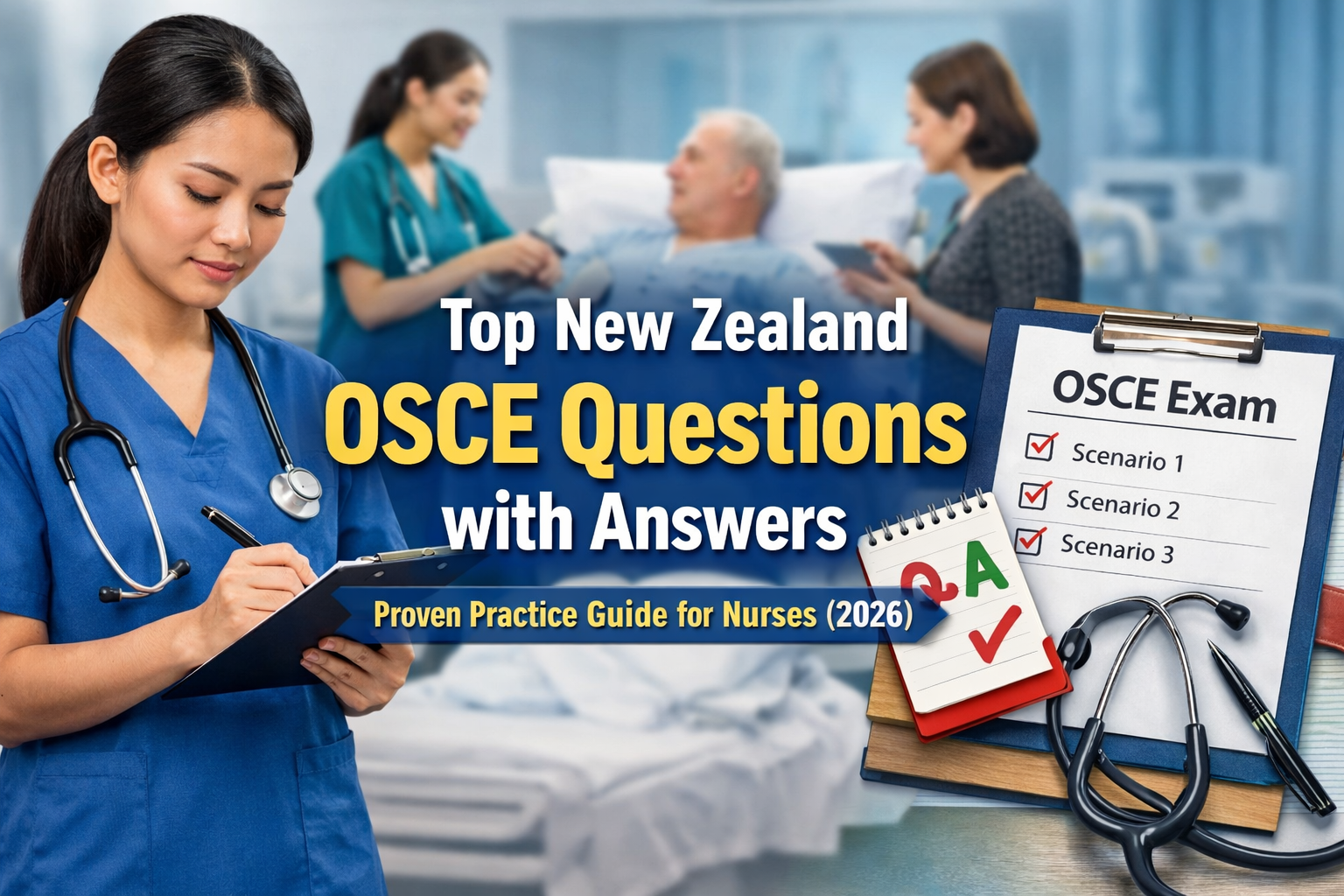
The OSCE is a practical clinical exam conducted in a simulation environment.
Candidates rotate through multiple stations where they must demonstrate:
- Patient assessment skills
- Communication with patients
- Medication explanation
- Infection control procedures
- Professional clinical behaviour
Each station tests both clinical competence and patient-centred communication.
Many international nurses find the OSCE challenging because it evaluates:
- Communication clarity
- Cultural safety
- Clinical decision making
- Professional behavior under pressure
Why Many Nurses Struggle with the OSCE
Even experienced nurses sometimes struggle with OSCE preparation due to several common challenges:
• Communication differences in healthcare settings
• Lack of real OSCE simulation practice
• Limited feedback on patient interaction skills
• Cultural differences in patient communication
Traditional coaching institutes often rely mainly on:
- Online lectures
- Recorded sessions
- Limited practical simulation
However, modern healthcare training requires more interactive and feedback-driven learning.
EVAS Academy’s AI-Integrated Training Approach
EVAS Academy introduces a hybrid training model that combines:
• AI-supported communication coaching
• OSCE simulation practice
• Instructor-guided training
• Cultural communication support
This approach helps nurses prepare for real exam scenarios rather than just theoretical learning.
AI Communication Coaching
EVAS Academy integrates AI technology to help nurses improve their professional communication during patient interaction training.
The AI system can help analyze:
- Sentence structure and grammar
- Professional healthcare language
- Clarity of explanation to patients
- Communication pace and tone
Example training feedback:
You said:
“I give you this tablet for pain.”
Suggested professional communication:
“I will give you this medication to help manage your pain.”
Reason:
Clearer and more patient-centred clinical communication.
This type of feedback helps nurses develop communication styles expected in New Zealand healthcare environments.
Cultural Communication for New Zealand Healthcare
Cultural safety is an important component of nursing practice in New Zealand.
During training, nurses also learn culturally respectful communication approaches, including appropriate Māori greetings such as:
- Kia ora
- Tēnā koe
- Whānau
Example:
“Kia ora, my name is Nurse Anna. I will be looking after you today.”
Understanding these cultural elements improves patient trust and professional interaction.
Realistic OSCE Simulation Training
EVAS Academy also focuses on practical OSCE simulation sessions, allowing nurses to practice clinical scenarios similar to the actual examination.
Common practice stations include:
• Patient admission and assessment
• Pain evaluation
• Medication explanation
• Wound care communication
• Patient discharge education
Simulation training helps nurses become confident in performing clinical tasks while communicating clearly with patients.
EVA’S Academy Training Outcomes
Based on EVAS Academy internal training records:
| Program | Pass Rate |
|---|---|
| NZ OSCE Preparation | 94.2% pass rate |
| IQN Theory Exam 2026 | 100% pass rate |
These results reflect the effectiveness of combining structured teaching, simulation practice, and AI-supported communication training. this data is from January 2026 till date .
Why Global Nurses Choose EVAS Academy
International nurses preparing for New Zealand registration choose EVAS Academy for several reasons:
AI-Supported Communication Training
Helps improve professional patient interaction skills.
OSCE Simulation Practice
Realistic exam-style training scenarios.
Experienced Clinical Mentors
Guidance from professionals familiar with international nursing standards.
Structured Learning Approach
Training designed specifically for the New Zealand nursing pathway.
The Future of Nurse Training
Healthcare education continues to evolve with the use of modern learning technologies.
AI-supported coaching systems can provide faster feedback and help nurses practice communication skills more effectively.
By combining technology-assisted training with hands-on clinical simulation, EVAS Academy aims to provide international nurses with practical preparation for their professional journey.
Start Your New Zealand Nursing Journey
For internationally qualified nurses planning to work in New Zealand, proper preparation is essential for success in both the IQN exam and OSCE.
EVAS Academy provides structured guidance, simulation training, and modern learning tools to help nurses build the confidence and competence required for their next career step.